


CARRAGEENAN: FOOD ADDITIVE
FOR HEALTHIER AND MORE DELICIOUS MEAT SAUSAGES
 The COVID-19 pandemic has affected the consumption patterns of the Indonesian people, fast food, ready-to-eat food, and frozen food have become people’s choices as daily food compared to fresh food. This is shown in the level of frozen food consumption, which has been increasing from year to year in Indonesia. According to the USDA (2022) in Soenaryo et al. (2023), frozen food sales data in Indonesia from 2019, 2020, and 2021 respectively was 29.9 million USD; 32.26 million USD; and 33 million USD. In addition to being practical and relatively cheap, frozen food also has a longer shelf life compared to fresh food.
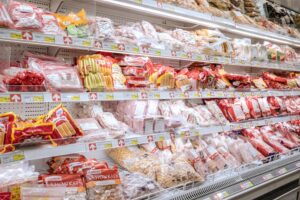 Indonesia’s frozen food market is projected to reach a Compound Annual Growth Rate (CAGR) of 8.68% until 2028 (Soenaryo et al., 2023). The frozen food products that are widely sold are dominated by processed meat products, one of which is sausages. Sausage is a processed meat product that is ground with or without the addition of other food ingredients and food additives that are allowed and put into sausage casings with or without the cooking process. Common raw materials used in making sausages are beef, buffalo, goat, sheep, pork, poultry, or other livestock, mechanically deboned meat (MDM), desinewed minced meat (DMM), hearts, livers, and animal skins (The National Standardization Agency of Indonesia, 2015). Meat sausages have a minimum meat content of 35%, while combination meat sausages have a meat content of at least 20% so sausages can be an alternative food product that is still rich in animal protein content.
 The frozen sausage industry produces its products through several processes, including the selection of fresh raw meat; mincing of meat as a raw material; mixing with other ingredients such as spices and other food additives; filling in sausage casings; tying sausages with threads; steaming in a steam room for 45 minutes at 85°C to kill microbes and ripen sausages; temperature decrease with a blower for 15 minutes at 35°C; Cutting; packaging with thermoforming and vacuum sealing methods, storage, and distribution to consumers (Edutainment Trans7 Official, 2021). One of the ingredients commonly added in the manufacture of sausages in the food industry is carrageenan. Carrageenan is generally added by 0.5-1.5% in sausage manufacturing as a source of dietary fiber, binder, filler, gelling agent, emulsifier, stabilizer, increasing water holding capacity (WHC), reducing cooking loss, and improving texture (resulting in chewier and juicier sausages) (Ganesan et al., 2019; Ismanto et al., 2018).
 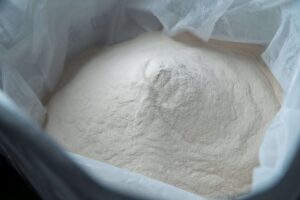 According to The Food and Drug Supervisory Agency of the Republic of Indonesia (2019), carrageenan is also categorized as a food additive that is safe to consume with a maximum limit of use by good food production methods. In addition to carrageenan, there are many other food additives added in the manufacture of sausages such as preservatives, flavorings, and food coloring. This encourages people to make sausages at home so that they are healthier and higher in protein because they can use a greater proportion of meat compared to other ingredients. Stay tuned for a homemade sausage recipe with carrageenan in next month’s article!
Sources:
Edutainment Trans7 Official. (2021). Si Unyil: Kepoin Pabrik Pembuatan Sosis Jerman Karawaci. Kepoin Pabrik Pembuatan Sosis Jerman Karawaci | SI UNYIL (05/01/21). Access date March 14, 2025.
Food and Drug Supervisory Agency of the Republic of Indonesia. (2019). Regulation of the Food and Drug Supervisory Agency Number 11 of 2019 concerning Food Additives. https://standarpangan.pom.go.id/dokumen/peraturan/2019/PerBPOM_No_11_Tahun_2019_tentang_BTP.pdf. Access date March 14, 2025.
Ganesan, A.R., Shanmugam, M., & Bhat, R. (2019). Quality Enhancement of Chicken Sausage by Semi‐Refined Carrageenan. Journal of Food Processing and Preservation, 43(7):1-11.
Ismanto, A., Lestyanto, D.P., Haris, M.I., & Erwanto, Y. (2020). Komposisi Kimia, Karakteristik Fisik, dan Organoleptik Sosis Ayam dengan Penambahan Karagenan dan Transglutaminase. Sains Peternakan 16(2):73-80.
National Standardization Agency of Indonesia. (2015). SNI 3820:2015 Meat sausages. https://id.scribd.com/document/345039960/SNI-Sosis-Daging-SNI-3820-2015-pdf. Access date March 14, 2025.
Soenaryo, M.S., Arifin, M., Komala, I., Ardat, M.A., & Murtini, D. (2023, Februari). Pengaruh Substitusi Tepung Garut sebagai Bahan Pengisi terhadap Kualitas Fisik dan Organoleptik Sosis Daging Sapi. Prosiding Seminar Nasional Cendikia Peternakan 2 “Strategi Sub Sektor Peternakan untuk Menghadapi Iso Resesi Global tahun 2023”, e-ISSN:2829-1417, Fakultas Peternakan Institut Pertanian Bogor.